One governed system of record for enterprise requirements.
Capture requirements as fact sheets. Review, approve, and baseline them. Trace each one from driver and goal through delivery and verification.
Most organizations cannot say which requirements were approved, what changed, or what was delivered.
Requirements sit in slide decks, spreadsheets, and ticket systems. Approval happens in email. Traceability is rebuilt by hand for each audit and abandoned after go-live. The cost shows up as rework, scope disputes, and compliance findings.
How it works
- CaptureRecord each requirement as a structured fact sheet, from a template or by import.
- GovernRoute it through review and approval under policies your organization defines.
- BaselineFreeze an approved set. Changes after that point go through a change request with a recorded decision.
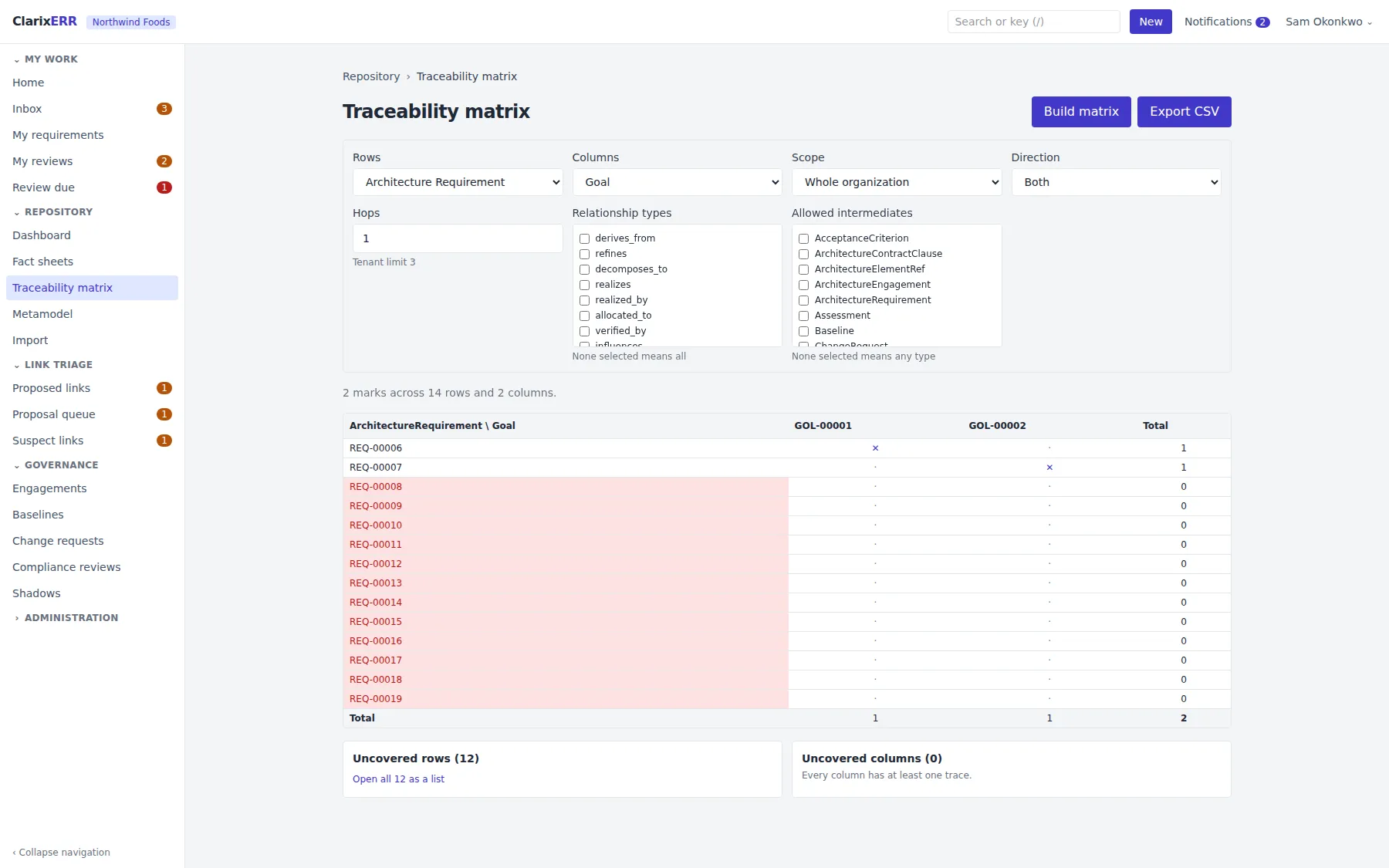
- TraceLink requirements to the drivers and goals behind them and to the deliverables and verification that close them. See coverage in the traceability matrix.
What it does
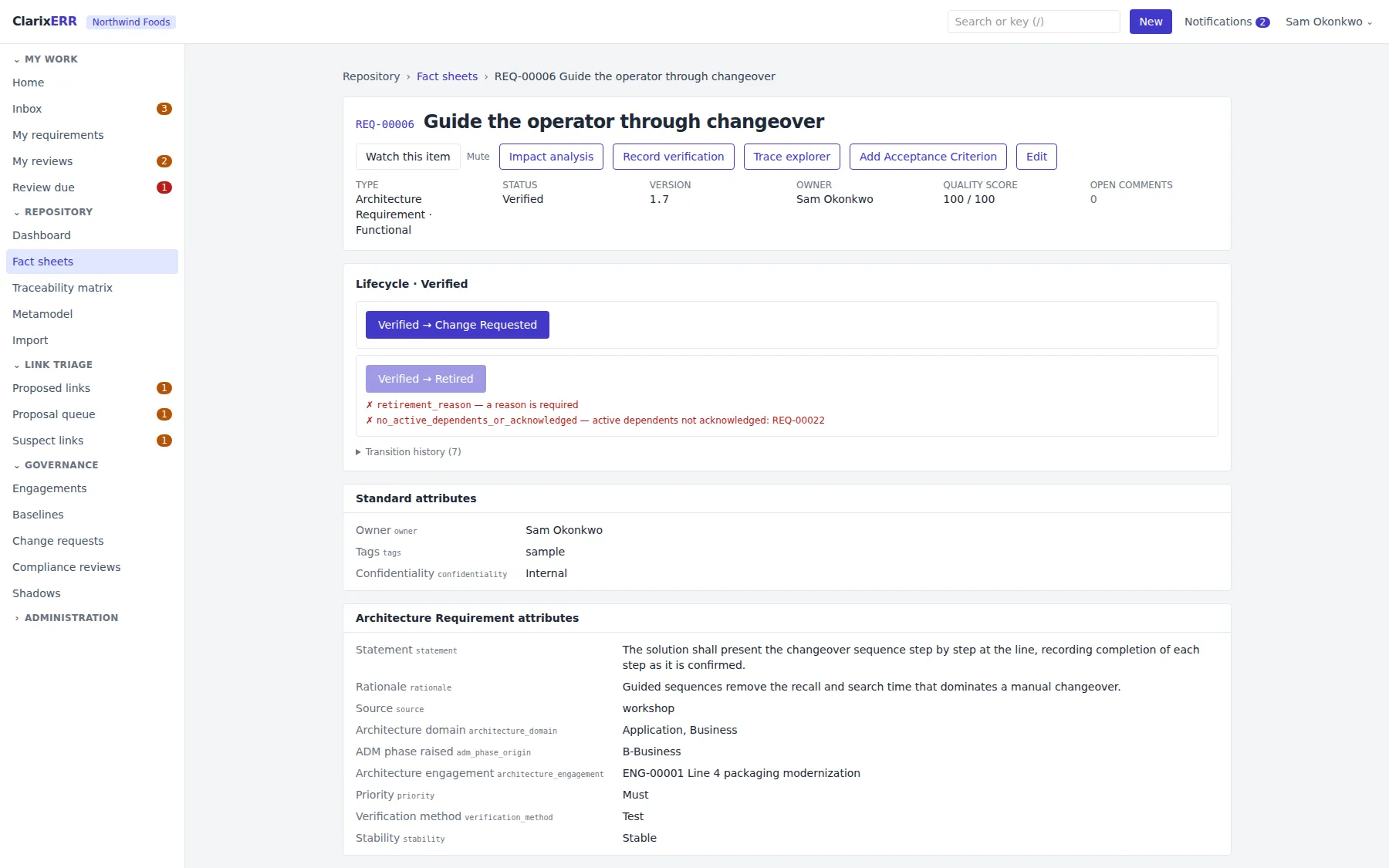
Structured fact sheets
Every requirement has a type, attributes, a lifecycle, and an owner, defined by a metamodel you can inspect.
Review and approval
Review policies, reviewer queues, reminders, and a recorded outcome for every decision.
Baselines and change control
Approved sets are frozen. Change requests carry rationale, impact, and a decision.
End-to-end traceability
A matrix from motivation to verification. Links that may be invalidated by a change are flagged as suspect for re-confirmation.
Quality rules and templates
Requirement and deliverable templates, organization vocabularies, and quality rules that hold requirements to a standard, including technology-agnostic wording.
Complete audit trail
Every change is recorded, searchable, and exportable.
Who it is for
Enterprise architects
Requirements tied to drivers, goals, and architecture work, in a structure aligned with TOGAF requirements management.
Business analysts
Templates, imports, and review queues that fit project delivery, including Agile teams working from user stories.
Governance, PMO, and compliance leads
Baselines, change decisions, compliance reviews, and an exportable audit log.
Built for people and AI agents working in the same repository.
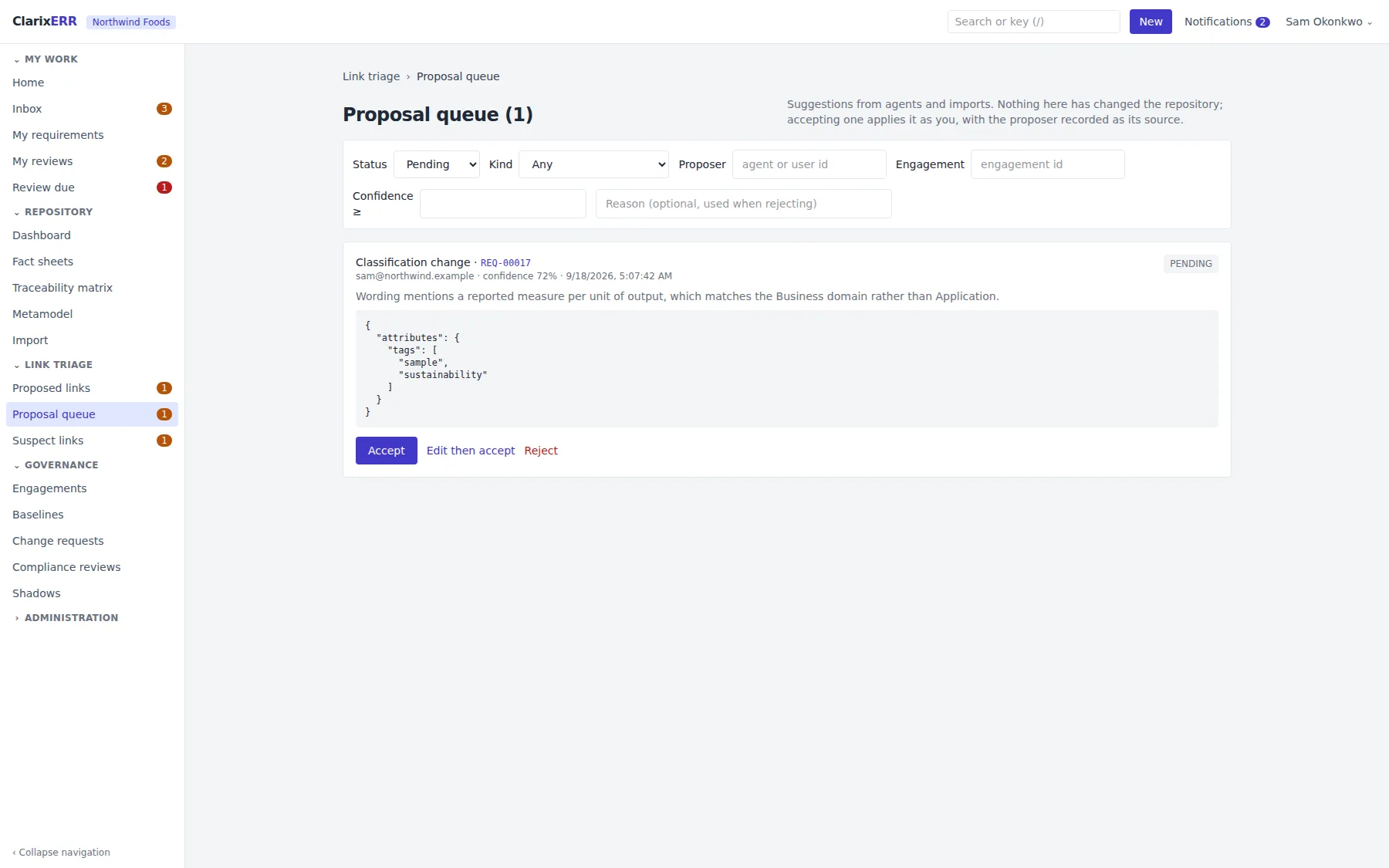
Agents get their own identities, scoped API tokens, and the same audit trail as people. An agent can propose requirements and links; a person decides what is accepted. Event subscriptions let other systems react to changes.
Working alongside other systems
Architecture elements, work packages, initiatives and contract clauses mastered elsewhere can be represented as shadows, with mastership defined per record type, so traces stay complete without duplicating ownership.
How your data is protected
Each organization's data is isolated. Access is controlled by roles and granular permissions. Every change is logged.
Details on the Security pageStand up your requirements repository today.
Create an organization, load the sample engagement, and see a full trace in a few minutes.